
Choosing an underwater fishing camera is not only about picking a screen and a camera head. For fishing brands, distributors, wholesale buyers, and OEM projects, it is a product line decision: monitor size, lighting mode, cable length, DVR function, battery capacity, housing design, packaging, and after-sales support all affect how the product performs in the market.
This guide explains how to choose an underwater fishing camera for real fishing conditions and for commercial product planning. It is useful for ice anglers and open-water users, but it also gives brands and distributors a practical checklist for selecting models, comparing configurations, and preparing OEM or ODM underwater camera projects.
The real bottleneck is rarely resolution alone. Visibility, lighting strategy, mounting stability, recording controls, cable handling, battery life, and overall usability usually decide whether a fishing camera becomes a reliable product or a frustrating return-risk item.
Key Buying Factors for Fishing Brands and Distributors
If you are selecting products for retail, private label, or wholesale distribution, start with the market you want to serve. Entry-level kits need simple operation and stable cost. Ice fishing models need cold-weather battery performance, clear monitor visibility, and reliable cable handling. Higher-end models may need DVR recording, larger screens, stronger lighting control, and customized packaging.
| Feature | Why it matters | Best for |
| Monitor size | Affects user experience, product positioning, and retail price range. | 4.3-inch and 5-inch for portable kits; 7-inch and 9-inch for higher-value models. |
| IR, white LED, or dual light | Controls visibility in low light, clear water, and murky water. | Ice fishing, night fishing, stained lakes, and deeper water. |
| DVR recording | Adds value for users who want to review footage or create content. | Mid-range and premium retail product lines. |
| Cable length and reel design | Influences depth range, ease of use, packing size, and failure risk. | Ice fishing, boat fishing, and deeper lake applications. |
| Battery capacity | Determines real working time in cold or long fishing sessions. | Ice fishing markets and all-day fishing use. |
| Private label packaging | Helps distributors build a consistent branded product line. | Brands, wholesalers, and channel sellers. |
For OEM buyers, the best model is not always the one with the highest specification. The better choice is usually the configuration that matches your target price, local fishing habits, warranty expectations, and channel positioning. BestWill can support private label underwater fishing camera projects with product configuration, logo, packaging, and manual-language options.
The output video quality from a fishing camera is affected more by murky water, algae bloom, silt suspension, and the depth rather than the resolution of the camera. Higher resolution is always better, but we should never ignore the essential camera specs.
The fishing camera specs that really matter are sensor sensitivity (lux rating), sensor size and type, lighting modes, low-light signal performance, lens aperture, depth rating, cable length, display latency, and recording controls. What are mostly the gimmicks are high resolution labels (4K and 8K recording), TVL numbers, Bluetooth connectivity over long distances, military grade without specs, fish detection overlays, etc. Now, these specs can work, but we are never sure. So, it is best to have a list of important things and specs to look for when buying a new camera. This article is going to help you with that. So, let’s get started.
The real reason underwater fishing cameras exist
Most anglers buy fishing cameras not to record high-quality videos but because they get tired of fishing blind. They want to understand fish behaviour, evaluate lure presentation, confirm underwater structure, and reduce the overall wastage of time. Now, most cameras fail not because they are “cheap” but because buyers prioritize resolution over the important things that we discussed above.
The purpose of these cameras is to increase the yield and improve your experience. However, a wrong decision can just ruin the purpose and waste your money. But, before we proceed to the actual things to look for first, let’s discuss the precursors of good-quality footage or live view underwater.
Three Things That Actually Determine What You See Underwater
A good fishing camera obviously gives you a better view and overall video recording quality. But some external factors greatly affect the appearance. Let’s discuss them first.
1.Water Clarity
Water is generally unpredictable. Suspended particles, algae, and sediment drastically reduce visibility. No matter how great your fishing camera is, the video quality will depend heavily on the water clarity. For example, you might have a Full HD camera with the best lighting, but if the water doesn’t allow, you might not be able to see a few meters away. Now, the results from IR light can be better even in murky water, and if you want to know more about infrared lighting in fishing, we discuss it in detail in this article.
2.Light Availability
Water absorbs light very quickly, and as you go deeper, this tendency increases more. At depth and during dusk or dawn fishing, visibility will depend heavily on the lighting and sensor performance.
3.Camera Position
The camera placement affects the footage. Little things matter here, like whether the camera is looking downward or horizontal, distance from the bait, and the movement in the water. Basically, the gear setup matters as much as the camera quality.
The Most Important Specs to Look for while buying a fishing camera
1.Sensor Quality
The sensor converts light into digital images. It is the most important spec in your fishing camera that decides the resulting video quality and sets a base for other features. The most common sensor types are CMOS and CCD.
Choosing the right sensor
CMOS Sensors (Complementary Metal-Oxide Semiconductors)
CMOS Sensors are most common in fishing cameras. They are more energy efficient and great for real-time applications. They are generally less expensive, compact, and run cooler. Most modern cameras, no matter their quality and other specs, use this sensor because of its wide availability and higher reliability. In the murky water, we can call its performance good but not the best. These sensors tend to exhibit noise in deep and dark waters.
CCD Sensors (Charge-Coupled Device)
CCD sensors have the main advantage of lower noise. Otherwise, the CMOS has almost replaced them. These sensors consume more power and generate more heat. However, the video quality is generally on the better side compared to the CMOS. They are more expensive and have a higher manufacturing cost. They capture motion well and have minimal distortion. The current market of CCD sensors has been phased out, and they are applicable only in old cameras or very high-end models.
IR Sensors (Infrared)
Infrared light is out of the visible light spectrum. These sensors don’t actually see the light but detect the object through the infrared light. The resulting output doesn’t have colors but only the structures. Now, it can be hard to detect the fish colors and species, but these sensors will allow you to see in murky water or total darkness. Your screen will turn black, and the fish and other structures will illuminate in white on the display. Now, these sensors are coming inbuilt with the regular fishing cameras that work with the white light. So, if you are going to fish in extreme underwater situations, IR light cameras can help, and sometimes are your only option.
Choosing the right sensor size
In the fishing cameras, sensor size refers to the optical format. It is measured in fractions of an inch. Fishing cameras need to be small to fit inside housing and avoid spooking fish; they are generally smaller in size. Here is what you can expect from different sensor sizes.
| Sensor Size | Physical Diagonal | Common Use Cases |
| ¼” | 4.5mm | Cheap and basic underwater kits |
| ⅓” | 6.0mm | Most mid-range models use them because of a good balance of cost and clarity. |
| ½.8” | 6.4mm | Generally used in high-end 1080P systems. |
| ½.3” | 7.7mm | Best for high-speed trolling and 4K footage. |
You should choose the ⅓” if you fish in clear to moderate water and want something under an easy budget. Look for a camera with an IR toggle button because, as you go below 4 to 6 meters, this camera may not work as well under normal lighting.
Go for ½.8” or larger sensor size if you fish in stained water. A larger sensor generally picks up more light and creates a good image even in a bad environment. They are good for deep fishing of more than 4 meters.
The ½.3 is surely the action choice for anyone looking for the best color reproduction.
In some cases, your fishing cameras manufacturer won’t list the camera size, and in that case, it is certainly ¼”. However, high-end and expensive cameras will brag about their sensor size. You now know what to pick.
2.Low Light Rating (Lux)
In simple words, Lux is the minimum illumination required for the camera to produce a visible or usable image. The lower the lux number of a camera, the better image it will produce in deep, dark, and stained water. The numbers start from 1.0 lux, which offers average performance. However, we can go till 0.01 lux in the visible light spectrum, which results in excellent low-light performance.
Lux rating becomes important when fishing in deep lakes, early morning, late evening, and under ice. But keep in mind that the Lux rating isn’t perfect and only gives a rough indication of low-light capability. In fact, if you generally fish in shallow and clear water with good lighting conditions, you can be good without knowing the Lux rating at all. Here is a table to help you understand the Lux rating much better.
| Lux Rating | Lighting Condition | Best for |
| 10,000+ | Direct Sunlight | Shallow water beds, clear water, or top water action |
| 500-1,000 | Overcast Day | Mid-depth scouting, general ice fishing, or daytime scouting |
| 1-10 | Dusk/Twilight | Deep waters (5-10 meters) where sunlight starts to fade |
| 0.1-0.01 | Full to Quarter Moon | Very deep water, walleye fishing, or lake trout |
| 0.001 – 0.0001 | Extreme Dark | The deepest holes or pitch dark fishing |
| 0.0 (IR) | Complete Darkness | Deep caves, night fishing, or underneath thick snow/ice. |
3.LED Lighting System
LED lighting is the most basic specification. It illuminates the area where natural light is insufficient. But choosing the light is always a trade-off between visibility and stealth. Too much light causes backscatter, where particles reflect light and create white specks in the image. So, most people would want to use dimmer lighting in murky water. In some cameras, you get the option to turn the lighting completely off in daytime fishing. The most common lighting configurations are:
Front-facing ring LEDs: Most common design
Side-Mounted LEDs: Reduced backscatter
Adjustable Brightness LEDs: Allow light tuning based on the environment and time of day.
You should also check for the right beam angle. For general scouting, a flood beam angle of 120 degrees is suitable because it lights up a wide area. However, with a spot beam angle of 15 to 30 degrees, you can easily punch through murky water to see something a little far away.
4.Viewing Angle (Field of View)
Viewing angle is pretty easy to understand. A wider viewing angle means you get a wider image of the area in front of you. Just imagine the wide-angle and normal camera in your smartphone. A very wide viewing angle will allow you to see in a larger area, but will make fish look smaller and farther away. On the other hand, a narrow angle will allow you to have accurate size details but will reduce situational awareness. You will get a focused view, but you will not be able to have a view a lot of the nearby things. So, you basically have to compromise either on the total area that you can see or the accuracy of the size of the things that you are buying.
Typical values are as follows:
90 to 110 Degrees: These angles are called jigger’s choice because when you are jigging, you want to know how far the fish is from you. Wider lenses (more than 135 degrees) will make a fish that is 30 cm away appear like it’s 1 meter away.
120 to 135 Degrees: If you want to look around the corner, these lenses will allow you to do so. For example, if you are looking for a specific rock pile or the edge of timber, the extra angle of view will save you from moving the camera much.
150 Degrees and more: These lenses will generally be found in the cameras that are supposed to move a lot, like drones and trolling. Because the camera is moving, a narrow lens will be too shaky and can miss the fish. So, these ultrawide lenses are great when it comes to the stabilization of the video.
5.Depth Rating
Depth rating is an important factor in a fishing camera, which decides the maximum water pressure the camera housing can withstand. The pressure increases rapidly with depth. So, it is best to pick the camera suited best for where you are going to utilize it. Several components inside the fishing camera determine the depth capability, like Seals, O-rings, and the housing material itself. Saltwater environments require stronger corrosion-resistant housing. Typical consumer ratings are as follows, and they are really simple to check. You just have to know where you are going to use your camera.
- 15 meters
- 30 meters
- 60 meters
6.Cable Length and Durability
Cable carries power and a video signal between the camera and the DVR. Having enough cable length is important, especially when you are going to do deep water fishing or if you are not sure about the depth. The common lengths range from 15 meters to 60 meters and can even go longer. However, keep in mind that longer cables come with the added risk of tangling along with heavier weights.
Cable durability also matters because it can experience abrasion from rocks, tension when lowering the camera, and twisting during retrieval. Features like reinforced jacket, anti-kink design, and waterproof connectors are always to look for.
7.Battery Life
The battery powers cameras, LEDs, and the DVR monitor. So, it is one of the most important aspects impacting how long you can fish. The budget systems will generally offer 4 to 6 hours of battery life, while you can expect 6 to 10 hours from mid-range systems.
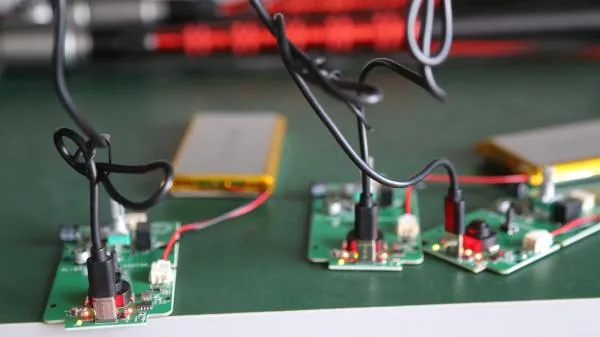
From premium setups, you can easily get 10+ hours of battery backup. Cold water reduces lithium battery capacity sooner. In freezing temperatures, your battery can drain 30 to 40% faster. However, you can go for the setups with removable batteries. Some cameras support input from power banks. So, all these things are important to ensure that your sessions don’t end midway.
Special Guidelines for buying Ice Fishing Cameras
Around 70 to 80% people buying fishing cameras actually buy ice fishing cameras. Because there is no visibility of even the water with the naked eye, cameras become necessary for anglers in places like frozen lakes. A frozen lake will be almost like a dimly lit chamber rather than a normal fishing spot. These things make ice fishing one of the hardest to do because you generally use specialized, sensitive, shorter rods and fish vertically.
Ice fishing cameras are a little different from the normal fishing cameras in several ways. First, they are designed for extremely cold temperatures. Because low temperatures can change electronic behavior, a good ice fishing camera must protect its internals so they keep working. Some ways cold affects electronics are as follows.
- Lithium batteries can lose charge more quickly.
- Display panels become sluggish or darker
- Cables stiffen and become brittle
Therefore, ice fishing cameras are designed with cold-resistant batteries, specialized displays, and insulated housing. So, you must make sure all these features are present before making your purchase. We have discussed all the general rules to follow, but here are some dedicated points to note for buying the right ice fishing camera.
- Low-Light or Night Vision Capability
- 8 to 12 hours battery runtime (Must be a cold temperature battery)
- 20 to 50 meters cable length with reinforced and high-tensile housing
- IP 67 or IP68 waterproof rating
- Temperature sensors
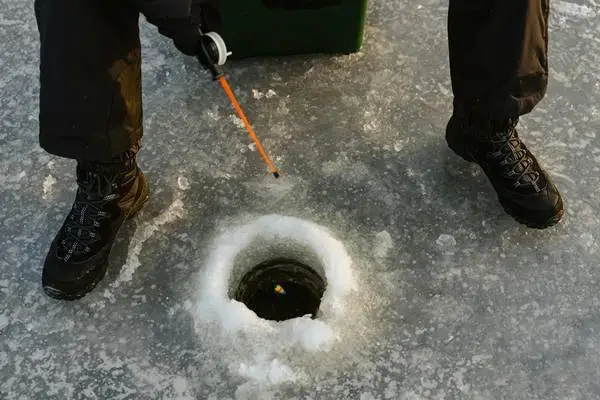
Ice fishing and battery life
People generally ignore the battery part and end up wasting their money because regular batteries drain too quickly even without being used in extremely low temperatures. Ice fishing cameras that use LiFePO4 or high-grade lithium packs are most suitable for cold weather.
Camera Stabilization is important
As we are well aware of the fact that ice fishing is done in a vertical hole, when you drop the camera in a hole, the cable twists and currents spin the camera. Many ice-specific cameras include directional fins, weighted housings, or camera positioners to keep the camera stable and usable for fishing. So, look for all these features.
Low-Light Adaptability
Even during the day, the thick ice sheet and snow block sunlight. Water under the ice will always look like dusk all day. So, a good ice camera should allow you manual control between IR and white light. Also, cameras with dimmable LEDs are far more useful than those with fixed brightness.
Common Buying Mistakes
Different fishing styles need the ideal fishing camera so that you don’t end up wasting your money. Here are some common things to avoid and never make any mistakes.
- Choosing the fishing camera based just on resolution
- Buying unnecessarily long cables
- Ignore water clarity conditions
- Choosing wireless systems without knowing their limitations
- Overpaying for recording features
OEM and Private Label Configuration Checklist
Before starting an OEM underwater fishing camera project, prepare the basic product requirements first. This makes quotation, sample confirmation, and production planning much faster.
- Target market: ice fishing, open-water fishing, boat fishing, or retail gift sets.
- Screen size: compact portable model, 5-inch kit, 7-inch system, or large-screen 9-inch system.
- Lighting option: IR, white LED, adjustable brightness, or dual-light configuration.
- DVR requirement: live-view only, photo/video recording, or playback function.
- Cable length, reel style, battery capacity, plug type, packaging, logo, and manual language.
Recommended BestWill Product Options
For a compact entry-level product line, you can start from CR110-4HCS or CR110-5HBS. For a stronger mid-range retail model, consider the CR110-7HES underwater fishing camera system. For larger-screen positioning, the CR110-9L large-screen underwater fishing camera may be a better fit.
If you are not sure which model fits your market, send us your target price range, preferred screen size, cable length, lighting requirement, DVR requirement, and packaging plan. Our team can help match a practical product configuration for your brand or distribution channel.
Frequently Asked Questions
What depth do fishing cameras generally handle?
Most consumer fishing cameras are rated between 10 and 30 meters. Budget models can handle up to 40 meters and even more, but these ranges can vary depending on the brand and other specifications.
- How far can fishing cameras actually see?
Visibility depends heavily on water conditions rather than the camera quality alone. In murky water conditions, cameras may only see up to some centimeters, while in clear water, the visibility can go from 5 to 10 meters.
- Are 4K fishing cameras worth it?
For most people, 4K fishing cameras provide very few to no practical benefits. Underwater visibility is limited heavily by water quality, and 4K can’t actually produce 4K quality if the water doesn’t allow it. Rather, a camera with a good Lux rating and a quality sensor can produce way better results.
- Can underwater fishing cameras replace fish finders?
Fish finders use sonar to detect fish and underwater structure over a wide area. On the other hand, fishing cameras provide visual confirmation of fish behavior and lure interaction.