
Underwater search is inefficient by design. Most underwater search missions fail not because of the lack of technology but because of how expensive it is to start the search process. As the depth of the water and the need for complicated tools emerge, the costs increase even more. High-end systems like ROV (Remotely Operated Vehicles) or ROUV (Remotely Operated Underwater Vehicles) are designed for serious inspections and interventions. They are not for blind searching. You will find these mostly being used to explore the ocean depth while being operated by people at the surface. Advanced ROVs can even perform various tasks underwater. So, for any initial search missions like general underwater inspections, recovery operations, and scientific surveys, they are generally overkill. Also, it is possible that we don’t have enough budget to spend on ROVs. Also, at some places, they can be inapplicable because of their large sizes.
So, in this article, we are going to discuss how the normal drop-off underwater cameras or portable 360-degree cameras can help you and keep your initial costs low. In most cases, you can complete the work without specialized equipment or ROVs.
ROVs are generally not necessary for early-stage search missions. The real bottleneck is not capability, it’s deployment cost and logistics. ROVs require trained crews along with support vessels and long setup times. ROVs have advantages, but they also have operational and cost issues. So, let’s discuss how the normal underwater inspection cameras can be great in the initial parts of any project.
What actually are initial search missions, and how are they different?
These are generally the opposite of deep-sea engineering tasks and heavy missions. Initial underwater search missions can include locating submerged objects, including debris. Search and rescue scanning also comes under it. In some cases, we can do anomaly detection in these projects. Basically, the goal of the initial search missions is to detect the presence of something. Speed matters in these, and low data depth is required. However, in full-fledged inspections, backed by ROVs, the goals are generally to interact with things or even repair them. The need for precision increases in this, along with a higher data fidelity.
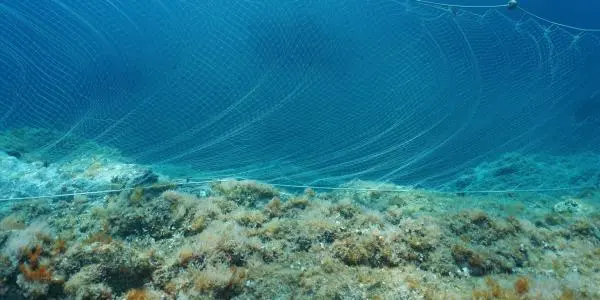
Generally, 70 to 80% missions don’t require full ROV capabilities but just the visual confirmation. So, basically, they are simple scout and observation missions which can be done with the normal drop-off cameras. But when deeper inspection and intervention are required, ROVs can become necessary.
Understanding the Environment before choosing the product
Before thinking about the right camera for the job, whether ROV, drop camera, underwater CCTV, or 360-degree inspection camera, it is important to understand the environment first. The actual underwater environment can be quite different from what we see from above or imagine it to be. There could be varying depths, water body structures, or simply different applications based on your needs.
For example, if the water is clear and you just want to see the aquaculture, an ROV is clearly an overkill and mostly a waste of your time and money. However, if there is a need for underwater repair or serious inspection, maneuvering is crucial; an ROV can be the best option. Basically, ROVs are mostly used in place of human divers because of the depth or the risk associated with certain dives. In most other cases, where time is critical, such as recovery missions, the normal inspection cameras will do the job quickly.
Why Traditional ROVs Are Overkill for This Stage?
ROVs are complex machines. They have their own thrusters, sonar, navigation systems, and various other intricate components. They come with multi-sensor payloads and heavy deployment infrastructure. They are costly, have limited agility, and offer a higher setup friction. Also, there are risks of using these expensive machines in uncertain conditions. They can cost you thousands of dollars, and repairs can also be quite expensive.
Sending an ROV to check if something exists underwater is like using a crane to pick up a coin.
Portable Underwater Inspection Cameras and Their Advantages
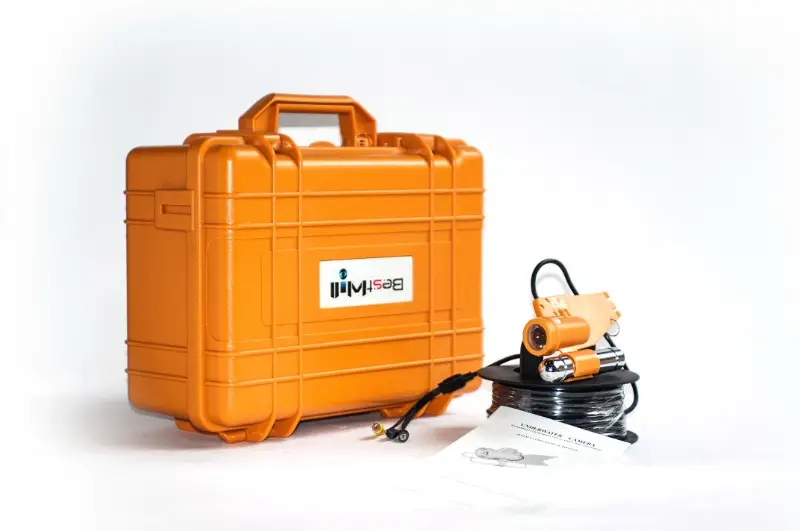
The lightweight, camera-first underwater camera is designed mainly for visual inspections and not for any intervention. They come with a camera sensor, basic mobility, and a lighting system (white light or IR), tether or wireless feed, and some kind of DVR for life feed and recording. With these, we strip everything down to just enough resources and intelligence to see underwater.
Comparing ROVs and Portable Underwater Inspection Cameras
| Feature | Traditional ROVs | Portable Underwater Cameras |
| Cost | Very High | Low |
| Deployment Time | Hours/days | Minutes |
| Crew Required | Multiple | A single operator is enough |
| Mobility | High | Moderate |
| Use Case | Intervention | Detection and Inspection |
| Risk | High | Low |
Real World Applications and where Portable Inspection Cameras win
1.Search and Rescue
Portable and 360-degree underwater inspection cameras are great for quick scanning in murky water. They are great first-response tools without the need for divers. They can be set up within minutes, and even a beginner can start the search mission. Given that the camera has a good sensor and lighting to see things inside the water, almost any search task can be done with it.
2.Dam and Reservoir Inspection
Underwater structures require regular inspection, and the portable cameras can make things easier for us. From detecting cracks, debris, and blockages, to easily creating reports on the underwater environment, the portable cameras can be perfect even for large-scale corporations working on these projects. If you want, we have a dedicated guide for choosing the right cameras for industrial applications.
3.Underwater Archaeology
These cameras are perfect for locating sites before full underwater exploration. In some cases, the speed of first visibility can be more helpful than the depth of analysis. So, for this type of task, the portable cameras can set a path for further explorations, which might or might not include ROVs.
4.Aquaculture Monitoring
There are dedicated fishing cameras available in the market, but any simple inspection camera can be used for quick fish health and net inspection. In most cases, ROVs will not be required except if you want to record professional underwater footage for movies or educational purposes.
Cost Breakdown: The Real Advantage
Industrial ROV systems require a higher cost due to equipment, crew, and vessel prices. However, the lightweight inspection cameras can be fully set up for under 1000$.
ROVs have hidden costs of logistics, training, maintenance, and downtime, which all can be skipped with the portable systems. The biggest saving isn’t the hardware but the decision speed. When you know that you can get your work done with a normal underwater camera, you can be ready to launch your project within hours, if not minutes.
Because an ROV will take time before it can start to explore, some issues may worsen. Some operations may pause, or the rescue windsor shrink. A portable camera will allow you to see things within minutes, and this is the biggest advantage we get from them. You don’t pay any deployment hesitation tax because of the expenses of the system. In case of a failure, more justification will be required from the operation teams.
Limitations of portable underwater inspection cameras
Compared to the ROVs, there are some disadvantages to the portable cameras. The first one is the inability to interact. Because there are no manipulators in these cameras, we can’t do physical things underwater. So, the key advantages can always be in terms of visibility and inspection. The portable cameras have limited depth as compared to the industrial ROVs. Also, there can be stability issues in strong currents. If the lighting and sensor strength is not good, visibility problems can occur, especially in turbid water. Basically, the drop cameras or even the 360-degree models work best as Stage 1 inspection systems. But if you want higher functionality, they can hardly do anything for you.
Advanced ROVs can use robotic arms to cut, grab, or perform repairs, keeping human divers safe. They can be equipped with movie-grade cameras, letting the divers record professional videos for professional use. The normal underwater cameras can’t replace ROVs, but because they are getting better day by day, we can expect more from them. In the initial search and inspection missions, they can be perfect for saving money and resources.
The Hybrid Approach
So, we first deploy our “Eye in the Deep”. With a simple and cheap inspection camera, we first identify targets and do the observation. We create a report or record the footage if necessary. Now, only if needed, a ROV can be deployed. This reduces unnecessary ROV deployment by a large margin. In some cases, you may not need an ROV at all. You can look at different modern options in the underwater inspection cameras, and it is possible that you get the right device that can eliminate the need for an ROV. It can be in terms of the depth that the camera goes, the quality of the video, or other features. Alternatively, when you know that your work will only get done with an ROV, it is best not to waste money on a portable camera unless you have other jobs for it in mind.
Use a normal camera if you are less than 50% sure that the target exists. You can also use it if the area is large and undefined. In case of budget constraints and time issues, simple cameras are great.
Use full ROVs if the target is confirmed or interaction is required. In the case of precision mapping, ROVs can be perfect. ROVs can have other dedicated features like pressure-tolerant compartments and specialized sensors for data collection. If these are your special needs, you have no other option than deploying your ROV.
Capability vs Necessity Table
| Capability | Required in initial search | Available in portable systems | Available in ROVs |
| Live video feed | Yes | Yes | Yes |
| High-end sonar | Rarely | Optional | Yes |
| Robotic arms | No | No | Yes |
| Precision navigation | Low Priority | Limited | Advanced |
| Object Interaction | No | No | Yes |
| Data Depth | Depends | Low | High |
| Data Clarity | Yes | Depends on the camera | High |
From this table, we can conclude that most ROV capabilities are unused in early-stage missions. However, the portable systems fulfil all our needs. Now, the environment and requirements in different missions can vary, and it is good to consider all the parameters before making the final decision.
Environmental Impact
It is very important to consider the overall impact on the underwater environment when deploying any type of device. Smaller systems disturb less marine life compared to the ROVs. They have lower energy consumption. Also, they are less intrusive than heavy ROVs. So, it is better not to deploy ROVs if you think the work can be done with the help of a normal camera. In some countries, it is mandatory to seek permission and permits for deploying ROVs. In sensitive areas, the government can even restrict their use. So, in those cases, our portable cameras can get the job done.
Conclusion
ROVs are specialized machines and can’t be replaced by other portable devices. They have their own purpose and applications. However, this article was about reducing unnecessary complexity and understanding your needs before you start using any device in your initial tasks. We want to highlight the effectiveness of moving from a heavy-first to a light-first approach in the underwater inspection missions. The future of underwater exploration doesn’t start with a machine that can do everything. The future starts with systems that answer one question at a time. This saves us our precious time and human resources.